close
Choose Your Site
Global
Social Media


Views: 0 Author: Site Editor Publish Time: 2026-08-27 Origin: Site


Investing in premium custom headwear transforms your brand strategy. It moves campaigns beyond disposable promotional items toward high-retention, retail-quality merchandise. People gladly wear comfortable, stylish hats everywhere they go. They become highly visible mobile billboards for your business. Quality apparel builds lasting customer loyalty.
However, poor execution carries significant risks for marketing teams. Subpar base fabrics or mismatched customization methods inevitably lead to low user adoption rates. You ultimately risk wasting valuable marketing spend on merchandise nobody actually wants to wear out in public. A poorly designed hat usually ends up discarded.
This guide provides a transparent, step-by-step framework for planning your next bulk order. You will discover exactly how to evaluate raw materials. You will learn to select appropriate logo application methods. We also show you how to effectively vet manufacturers to ensure consistent quality. Follow these guidelines to execute a flawless custom apparel project from concept to delivery. You will gain actionable insights to protect your budget and elevate your brand presence.
Material dictates longevity: The choice between acrylic, wool, and polyester impacts not just cost, but structural integrity and user retention.
Design constraints drive production methods: Intricate, multi-color wrapping designs require jacquard knitting (higher MOQs), while standard logos are better suited for embroidery or patches.
Prototyping mitigates risk: Skipping the physical sample phase is the leading cause of misaligned logos and sizing errors in high-volume production.
Lead times vary by technique: Domestic customization on pre-made blanks offers speed, while fully custom manufactured runs require extended supply chain planning.
Choosing the right fiber forms the absolute foundation of any successful headwear project. Fiber selection directly impacts durability, thermal performance, and user comfort. We must evaluate three dominant categories closely to ensure optimal product performance.
Acrylic dominates the custom headwear market for very good reasons. It provides a highly reliable baseline for bulk corporate merchandise.
Pros: This synthetic fiber is naturally hypoallergenic and highly colorfast. It takes vibrant dyes exceptionally well during manufacturing. You will find it budget-friendly for large campaigns. It also proves highly resistant to shrinking after routine machine washing.
Risks: Acrylic remains prone to pilling over extended heavy use. Daily friction creates small fiber balls on the exterior surface. Furthermore, it lacks the ultra-premium hand-feel characteristic of natural fibers.
Best Practice: Buyers often assume all acrylics feel scratchy. However, requesting a "soft-spun" acrylic dramatically improves the final texture.
When active users need durable gear, they often turn to the Polyester Knit Beanie. This engineered material excels in highly demanding physical environments.
Pros: Polyester offers exceptional shape retention. It bounces back easily after intense stretching. The fabric features excellent moisture-wicking capabilities and high overall durability. These specific traits make it ideal for outdoor workwear, activewear brands, and high-stretch requirements.
Risks: Polyester presents a less traditional "chunky" aesthetic. It often looks sleeker and more modern. Additionally, it can feel less breathable if manufacturers do not blend it correctly.
Common Mistake: Relying on 100% rigid polyester limits comfort. Adding just three percent spandex greatly enhances elasticity and wearer comfort.
Natural wool elevates any standard Knit Beanie into a luxury corporate gift. It immediately appeals to high-end retail audiences.
Pros: Wool delivers unmatched thermal regulation in extreme weather. It keeps users warm without overheating them indoors. The natural fibers possess inherent odor resistance. They also carry a massive perceived value for executive gifting initiatives.
Risks: Natural fibers require strict care instructions. Users must hand wash and air dry them to prevent severe shrinkage. They represent a significantly higher cost per unit. You must also consider potential allergen issues for sensitive skin.
Best Practice: Specify Merino wool over traditional sheep's wool. Merino fibers are much finer. They completely eliminate the notorious "itch" factor.
Table 1: Material Comparison Matrix
Material |
Best Use Case |
Durability |
Care Difficulty |
|---|---|---|---|
Acrylic |
General Promotional |
Medium |
Low |
Polyester |
Activewear & Workwear |
High |
Low |
Wool Blends |
Premium Gifting |
High |
High |
The physical constraints of knitted fabric dictate your customization approach. You must align your brand logo exactly to the right application method. Ignoring these mechanical limits ruins expensive production runs.
Embroidery pushes threaded needles directly through the finished fabric. It remains the most common personalization method globally.
Best for: We recommend direct embroidery for clean typography. It works perfectly for bold corporate logos and high-contrast designs.
Implementation criteria: This method requires careful file digitization. The digitizer translates your logo into precise mechanical needle paths. Fine knits easily support high detail and small lettering. Conversely, chunky knits pose severe risks. They often cause logo distortion or result in "sinking" threads. The design simply disappears into the deep yarn ridges.
Common Mistake: Avoid using extremely thin fonts. Needles struggle to replicate hairline typography on highly elastic surfaces.
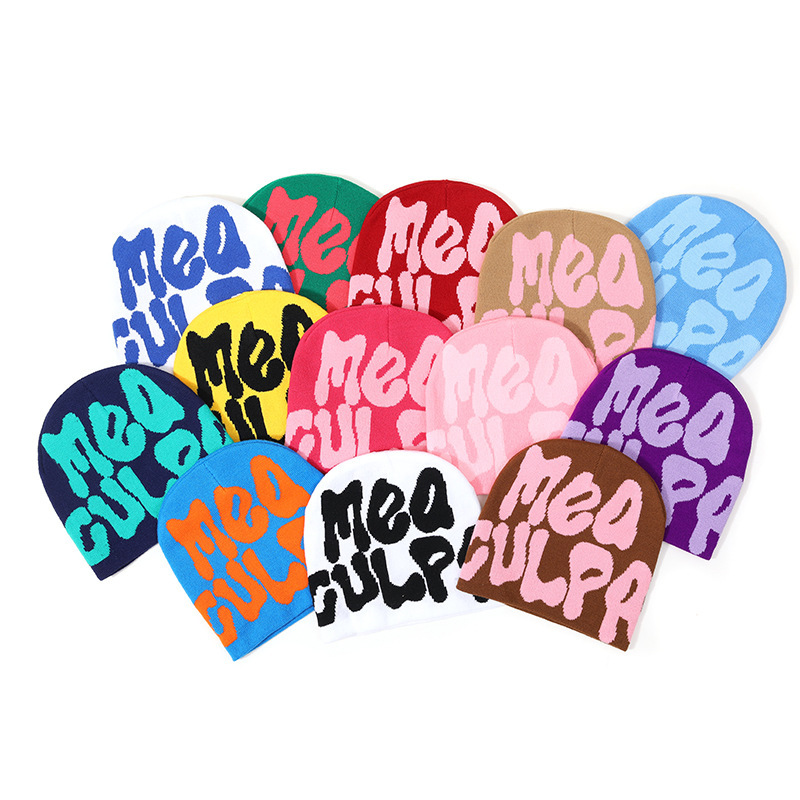
Jacquard processes weave your specific design directly into the textile itself. The pattern physically becomes part of the fabric structure.
Best for: This technique is best for full-crown patterns. It handles multi-color branding and complex edge-to-edge designs perfectly.
Implementation criteria: Factories weave the artwork directly into the fabric during fabrication. This specialized process requires higher Minimum Order Quantities (MOQs). The factory manufactures the hat completely from scratch. They do not customize a pre-made post-production blank.
Best Practice: Keep jacquard designs limited to three colors per row. Too many colors create bulky, uncomfortable thread floats on the interior.
Patches offer a distinct alternative to direct thread applications. They provide a beautifully flat, stable surface for complex artwork.
Best for: Choose patches for intricate designs containing tiny text. Leather patches deliver highly sought-after vintage aesthetics. PVC patches create massive modern streetwear appeal. Woven patches handle fine illustrative details beautifully.
Implementation criteria: Factories sew the completed patch directly onto the folded cuff. This completely avoids the thread-sinking issues associated with direct embroidery. Patches ensure exact brand replication regardless of the underlying fabric texture.
The physical silhouette determines how the headwear drapes and functions. Consider your target demographic carefully when selecting these structural elements.
The base profile sets the tone for the entire piece.
Cuffed: A folded cuff provides a double layer of fabric directly over the ears. This construction delivers maximum warmth in severe winter conditions. Furthermore, it creates a natural, flat billboard. This stable flat surface is ideal for patch and embroidery placement.
Uncuffed: Uncuffed profiles offer a highly relaxed, streetwear-oriented drape. People often call this a "slouch" style. However, this shape leaves you limited to lower-edge customization only. You lack the reinforced double-layer backing found on traditional cuffed alternatives.
Gauge refers to the exact number of stitches per inch. It directly dictates the texture and stretch of the final product.
Fine Gauge: These specialized machines produce a tightly woven, highly smooth surface. Fine gauge construction is optimal for complex embroidery. It also provides a flexible, universal fit for diverse head sizes.
Chunky/Cable Knit: These traditional styles feature a much looser weave. They look highly textured and very cozy. However, this uneven surface severely limits customization. You must stick to patches or very simple, thick-lined embroidery to maintain brand legibility.
Small finishing details drastically alter the final aesthetic appeal.
Incorporating pom-poms: Top pom-poms add immediate playful retail appeal. You can select contrasting yarn colors to match your logo or use a solid color.
Fleece lining options: Factories can sew a micro-fleece band inside the interior crown. This addition is vital for extreme winter environments. It blocks wind effectively. Note this increases your per-unit cost and slightly reduces interior stretch.
Bulk procurement requires strict attention to supply chain logistics. Missing a critical detail can easily derail your entire marketing campaign.
Production scales strictly dictate your final pricing structure. You must match your specific order volume to the right supplier type.
Domestic blank customization: Local suppliers customize pre-made warehouse inventory. This route usually starts at low volumes of 24 to 50 units. It works exceptionally well for small corporate teams.
Fully custom/Jacquard manufacturing: Custom weaving requires heavy industrial machinery setup. This intensive process typically requires 150 to 300+ units. High volumes justify the initial loom setup costs.
Timelines vary drastically based on your chosen manufacturing origin. Plan your seasonal marketing drops well in advance.
Standard domestic runs: Local embroidery on blank stock typically takes 2 to 4 weeks. This timeline covers standard approval and fast production phases.
Overseas custom manufacturing: Factory-direct manufacturing generally takes 6 to 12 weeks. You must mandate a safety buffer time. Customs inspections and unexpected ocean freight delays happen frequently during peak seasons.
Rigorous quality assurance prevents wildly expensive bulk errors. Never skip the formal approval phases under any circumstances.
Digital Proofs: Suppliers generate realistic computer mockups first. You must firmly confirm scale, exact placement, and pantone matching. Consider this a mandatory first step before spending any money.
Physical Samples: We highly recommend ordering a physical prototype for orders exceeding 250 units. You need to physically verify machine thread tension. You must check patch adhesion and overall stretch fit before authorizing mass production.
Poor artwork files constantly delay production and incur hidden fees. Submit high-quality vector files format (.AI, .EPS, or .SVG). Vector graphics scale infinitely without losing any pixel resolution. Proper mathematical files help you avoid expensive digitization upcharges. They also ensure crisp edge translation when the factory programs the embroidery machines. Raster images often result in blurry, inaccurate thread paths.
Successfully executing a bulk custom headwear project requires balancing three critical factors. First, prioritize your intended use case to determine the best base material. Second, consult your brand guidelines to select the most appropriate customization type. Third, calculate your required delivery date to choose a realistic manufacturing method. Aligning these three variables eliminates production surprises and guarantees high user adoption.
To begin your project, audit your existing brand assets to ensure you have correct vector files. Next, define your target order volume to understand your pricing tier. Finally, request a digital mockup from a thoroughly vetted supplier to initiate the formal quoting process. Taking these precise steps ensures your next apparel run hits the mark perfectly.
A: Designers typically build them using negative ease. They measure around 8 to 9 inches in width when laid completely flat. The ribbed fabric easily stretches to accommodate a standard 22 to 24-inch adult head circumference comfortably.
A: Most manufacturers permit mixed blank fabric colors. However, your customization method must remain identical. The logo size, placement, and specific thread or patch colors must stay strictly uniform across the entire batch.
A: Yes, setup fees are generally one-time charges. Reputable suppliers keep digitized embroidery files or custom patch molds securely on file indefinitely. This standard practice makes exact future reorders highly cost-effective and much faster to produce.


